
When School Meals Become Fuel for Engagement and Learning
By Sarah Torian
What if one of the most powerful tools for engaging students in learning is already happening in every school, every day? Food.
As the Georgia Department of Education’s (GaDOE) School Nutrition team and local leaders are demonstrating, quality school meals can be much more than a source of nourishment. They can be an entry point for conversation, curiosity, connection and learning — linking the cafeteria to the classroom and the school to the broader community.
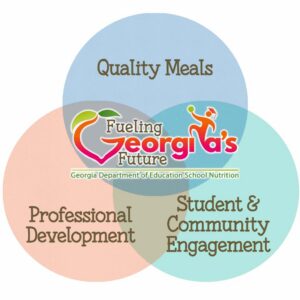
That matters because engagement is the fuel for learning. When children are interested, connected and actively participating, they are better positioned to learn. And food offers a particularly natural way to spark that engagement. Food is social. We gather around it, talk about it, share it, and bring our experiences with it from home and community into school.
Georgia is increasingly leveraging that potential. GaDOE has developed a growing collection of resources that help school nutrition professionals and educators use food to make learning more engaging, including Taste and Talk conversation starters, taste-testing activities, Georgia Grown videos, Harvest of the Month resources, food-themed reading activities, and recipes. These tools create opportunities for students to describe what they taste, learn new vocabulary, read recipes, write about food experiences and connect classroom concepts to something tangible and familiar.
“We developed the taste and talk conversation starters and taste test toolkit about six years ago,” Dr. Linette Dodson, GaDOE’s Deputy Superintendent of School Nutrition explains. “There is so much flexibility in how they can be used — in the classroom, in the cafeteria, in afterschool programs, and at home.”
The approach is intentionally cross-disciplinary. A food-based activity might bring fractions to life with apple slices, turn a science lesson into an exploration of physical and chemical change, or give students a reason to practice persuasive writing. In Georgia, school gardens and Farm to School activities extend those opportunities even further, connecting students with agriculture, geography, and their communities.
In Elbert County, School Nutrition Director Bridgette Matthews has made food-based learning part of the way she works with teachers. She participates in professional learning teams, listens to what educators are planning, and looks for ways food can help bring lessons to life. She has used apples and applesauce for literacy and science activities, Cheerios and muffin tins to teach division, and milk and vinegar to explore microorganisms. “The students are really engaged because I come in with food,” she explains, “but we use that food to make the standards come alive.”
Her advice to other districts is refreshingly practical: start small and find a champion. “There is no reason why you can’t do this,” Matthews says. “Sometimes it takes one teacher to be your champion.” She also urges nutrition directors to build relationships with students, listen to their feedback, and become part of school life — not simply the person serving lunch. In Elbert County, students have even helped select recipes for school menus, giving them a voice in the meals they eat.
The connection extends beyond school walls. Elbert County’s “LitTok” literacy evening brings families together around books, food and community resources, with schools, 4-H and local businesses contributing to the experience.
Georgia’s approach also puts local agriculture at the center of the learning process. Through Farm to School and Georgia Grown initiatives, schools can connect students with farmers and the foods grown in and around their communities — from peaches and peanuts to watermelon, Vidalia onions, and other Georgia products. A Georgia Grown food can become the starting point for a conversation, a story, a recipe, a scientific investigation, a writing assignment — or simply a new connection between a child and the place where they live.
This is the kind of cross-sector, systems-level thinking that Get Georgia Reading Campaign is committed to advancing: addressing the underlying factors that influence children’s language and literacy development — including nutrition and food security — while leveraging the many places, people, and everyday experiences that can support learning.
“By combining nutrition and culinary expertise, we’re not only bringing fresh, locally grown ingredients to school meals but also making healthy eating exciting and empowering for students,” states Kelley Toon, the academic nutrition and support manager at GaDOE.
For Georgia schools and communities, the invitation is simple: look at what is already happening and connect the dots. Start with one teacher, one food, one lesson, or one conversation. Invite school nutrition staff to the table. Ask students what they think. Connect the cafeteria to the classroom, and the classroom to families and community. Quality school meals can nourish children’s bodies — and, when we make the most of them, help nourish their curiosity, language, relationships, and capacity to learn.
Explore GaDOE’s School Nutrition Resources:
- Food-Based Learning Resources – featuring Taste & Talk food-themed prompts, Taste Test Toolkit, Harvest of the Month promotional materials and more to help educators and school nutrition professionals integrate food into student achievement efforts.
- Georgia Grown Food-Based Learning Video Series – featuring Georgia farmers discussing how food items such as peaches, squash, and strawberries are grown, harvested, and prepared.
- FuelCast – a podcast production of GaDOE’s School Nutrition program, including a session featuring Bridgette Matthews of Elbert County Schools.