
Celebrating Farm to School & Farm to ECE Month
Happy Farm to School & Farm to Early Care and Education (ECE) Month!
Here in Georgia, Farm to School and Farm to ECE is especially significant, as it ties an important economic asset to our most valuable asset of all – the health, wellbeing, and future of our children. This year’s theme celebrates Georgia apples, and indeed, our kids are the Apple of Our Eye!
For those not familiar with the Farm to School and Farm to ECE movement, its goal is to tie agriculture and farming to all aspects of the school and early education systems. Popular strategies for this include taste testing, starting and maintaining school gardens, strategic procurement that prioritizes local and fresh food purchases, garden-based learning, and/or embedding nutrition and agricultural education into all aspects of the curriculum. It’s a win-win-win for children, farms, schools, and communities: it has a positive impact on the health and wellbeing of kids; it increases the customer pool available to farmers; and it has a myriad of benefits ― articulated in more detail below ― on schools and communities. The Get Georgia Reading Campaign is proud to promote and celebrate Farm to School and Farm to ECE.
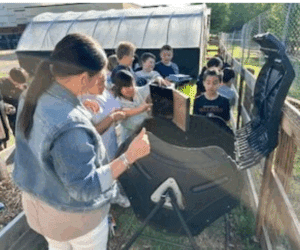
One question we hear often ― how does Farm to School and Farm to ECE relate to early literacy? If you’re familiar with the Get Georgia Reading Campaign, you know that our approach goes deep on the factors that may impede the ability of students to learn. Farm to School and Farm to ECE can positively impact several of those factors, including issues like child poverty, health, and school climate.
In Georgia, nearly 60 percent of children in public schools are eligible for free or reduced-price lunch. Many students are “directly certified,” meaning that a child automatically qualifies for free school meals based on participation in federal food assistance programs like SNAP. We also know that about 1 in 7 people in our state experience food insecurity, including about 20% of children. This makes school and early care settings an especially strategic opportunity to improve the quality of the food children eat, with the overall goal of improving child wellbeing and readiness to learn. Farm to School and Farm to ECE introduces fresh fruits and vegetables ― and sometimes meat and dairy ― into school cafeterias, often paired with taste testing and sometimes with students participating in planting and harvesting produce. Evidence demonstrates that children are more likely to consume fresh, healthy food if they taste it first ― or even better ― help grow it themselves.
Related, we know food consumption directly influences health. Improving school meals through Farm to School and Farm to ECE efforts can play a direct role in improving child health outcomes, especially related to childhood obesity and related chronic conditions.
Often overlooked is the impact Farm to School and Farm to ECE can have on the learning climate. Farm to School and Farm to ECE provides an opportunity to build community and social connections between children, adults, and communities, and improve kids’ mental health and self-esteem, physical activity, engagement, and behavior. It can provide a new, creative platform for teaching core subjects like English/Language Arts, science, and math through prioritizing fun, project-based learning. When schools and early care settings integrate gardens, there’s also evidence that it increases community interest in and awareness of local food, especially in low-income communities and communities of color. Combined, these efforts may improve the overall vibe of the school, making it more likely that students are happy to attend. There’s a strong correlation between school climate and school attendance. As Georgia embarks an effort to combat chronic absenteeism, Farm to School and Farm to ECE could be an important strategy to support that.
This is just a short introduction to the benefits of Farm to School and Farm to ECE. We’re happy to provide more information, and we’d love to learn more about how you are implementing Farm to School and Farm to ECE in your community, and what the impact has been. Please send stories to ggr@gafcp.org or share them on social media at #GAFarmtoSchool; #GAFarmtoECE; #AppleofOurEye
By Akia Lewis, Get Georgia Reading