
The Campaign represents a new way of working together across Georgia, across sectors, across agencies and organizations, and across the early years and early grades. We use data to identify patterns that point to underlying factors affecting language and literacy outcomes in order to find clues that lead to new—and sometimes unexpected—solutions.
These tools developed for the Campaign can help state and local leaders understand and address the challenges our children are facing on the path to literacy.
Readiness Radar: Access early care and education programs statewide; education, health, housing, economic, and demographic indicators at the neighborhood and county level; GEEARS Early Childhood Index for all Georgia census tracts; community profiles for cities, counties, and legislative districts; and early childhood education supply, demand, and gap analysis for five-county Metro Atlanta (Clayton, Cobb, DeKalb, Fulton, and Gwinnett) via the ATL ACCESS Map. This video overview will help new users learn their way around the tool. For more information about the work of our mapping partner, visit Neighborhood Nexus.
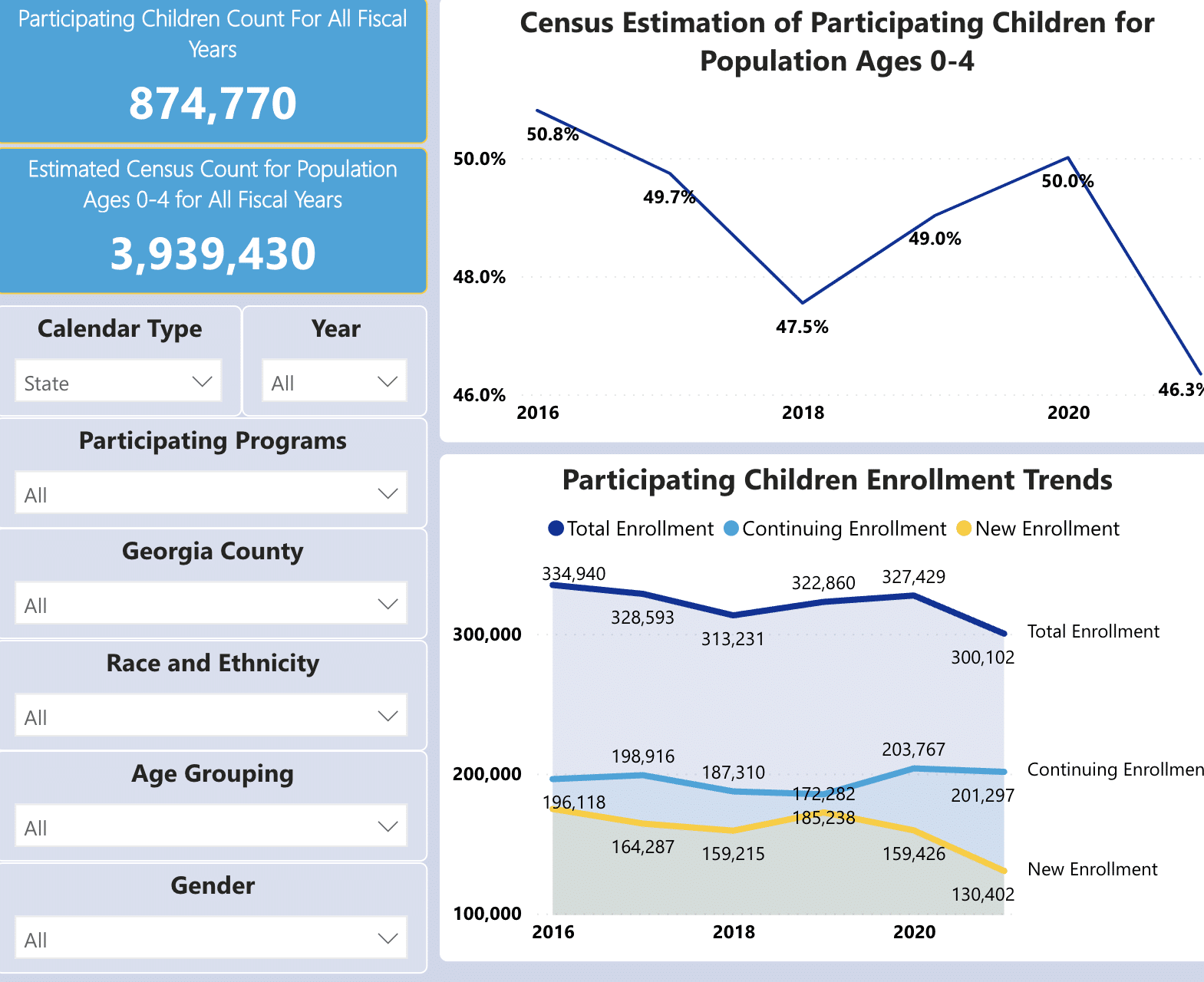
Georgia’s Cross Agency Child Data System (GA CACDS) Community Data Explorer: This tool summarizes program participation for children ages 0 – 5 enrolled in various early childhood services at the state- and county-level by race/ethnicity and gender.
Explore more by visiting these data tools developed by Campaign partners:
- Georgia Insights: An initiative of the Georgia Department of Education focused on improving and increasing the role of data-informed decision making among education decision makers in the state, Georgia Insights is the go-to location for data dashboards, data files, and data resources. By providing data in a streamlined, usable, and useful manner, Georgia Insights equips educators, parents, and communities with the tools and information needed to enact positive change in Georgia’s schools.
- Georgia KIDS COUNT: Georgia Family Connection Partnership compiles current, reliable data on child well-being in each of our state’s 159 counties, reporting year-to-year data highlights, trends, and disparities to inform planning, budget, and policy decisions regarding priorities, services, and resources that impact Georgia’s children, families, and communities.
- Governor’s Office of Student Achievement (GOSA) Report Card and Georgia School Reports: The Report Card offers school-, system-, and state-level reports with detailed data on a wide range of student achievement and demographic indicators for every public school in the state. GOSA’s Georgia School Reports include A-F letter grades based on school performance, state test results, student body makeup, and graduation rate.
- Online Analytical Statistical Information System (OASIS): This suite of tools developed by the Georgia Department of Public Health includes tables, maps, and charts highlighting a variety of public health indicators that are sortable by population, disease, and survey characteristics.